Blog post
Insights
Welcome Email Series Best Practices: 8 Tips That Convert
Welcome emails can generate revenue, not just polite introductions. An Experian CheetahMail analysis of 65 clients across industries, covering campaigns sent from May 2009 through April 2010, found that welcome emails generated eight times the revenue per email of standard bulk promotions. That's historical evidence, not a forecast for your Shopify store, but it makes a strong case for treating signup as a commercial opportunity.
Most brands still build their welcome series backward. They choose a template, add a discount, write a founder story, and schedule the messages. Only afterward do they consider what happens when someone purchases, abandons checkout, or joins through a completely different offer.
A welcome series should function as revenue infrastructure. Every message needs a lifecycle purpose, every incentive needs a margin check, and every branch needs a clear destination. Otherwise, you risk paying to acquire subscribers, discounting purchases they would've made anyway, and continuing to pitch after they've bought.
Build the welcome series around the subscriber's next decision, not the brand's next announcement.
The practical work starts before the first subject line. You need to grow an email audience that buys, preserve the context behind each signup, and connect acquisition messaging to the customer experience after checkout. These welcome email series best practices turn that approach into an actionable system.
Choose the business outcome before writing the emails. A prospect welcome series should usually prioritize a profitable first purchase. Repeat purchasing belongs in the measurement plan, but it shouldn't justify keeping customers inside a prospect sequence after they've ordered.
Write a goal that names the audience, desired action, and commercial guardrail. For a fashion brand, that might mean converting new noncustomer subscribers into first-time buyers while maintaining an acceptable contribution margin after incentives and returns.
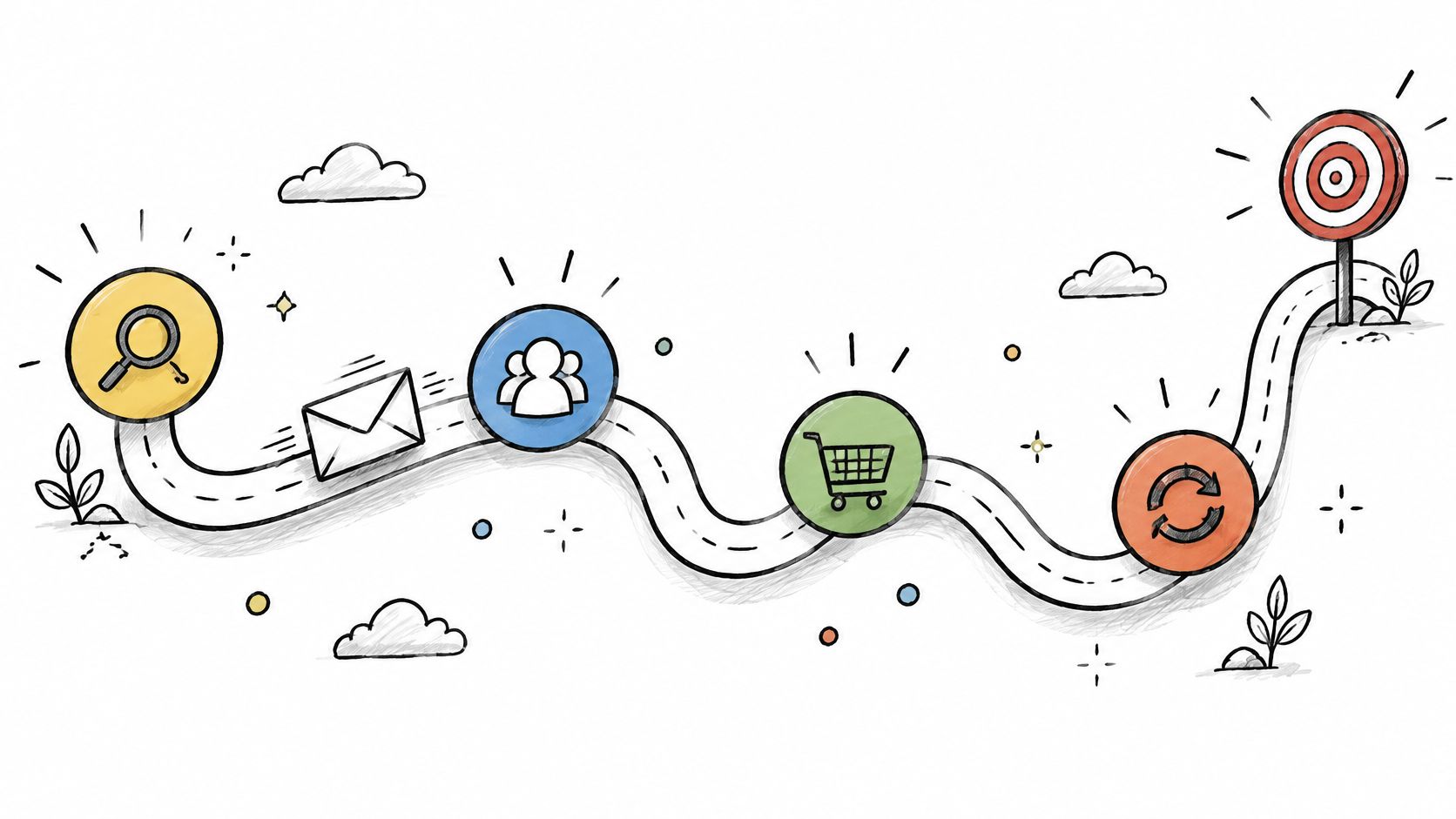
Map your customer lifecycle phases before opening Klaviyo's flow builder. Discovery, evaluation, purchase, and early ownership require different messaging, even when the same person moves through them quickly.
Say a clothing subscriber understands the aesthetic but hesitates over sizing. Another founder biography won't resolve that concern. A fit guide, model measurements, and a clear returns explanation might.
Assign each message a primary CTA that matches its job. An educational email can link to a product-selection guide; an offer email should take shoppers directly to eligible products.
Before launch, define how you'll evaluate placed-order rate, revenue per recipient, contribution margin, and later customer quality. Set a review date and name an owner. Without that accountability, a welcome series can remain active long after its assumptions stop matching the business.
A wellness quiz subscriber has already explained what they want. A discount-popup subscriber may have shared nothing beyond an email address. Sending both the same generic introduction throws away useful context.
Preserve signup source as a profile property, alongside the offer shown, declared category interest, and relevant consent details. Use consistent values across forms so your flow doesn't depend on a collection of nearly identical source names.
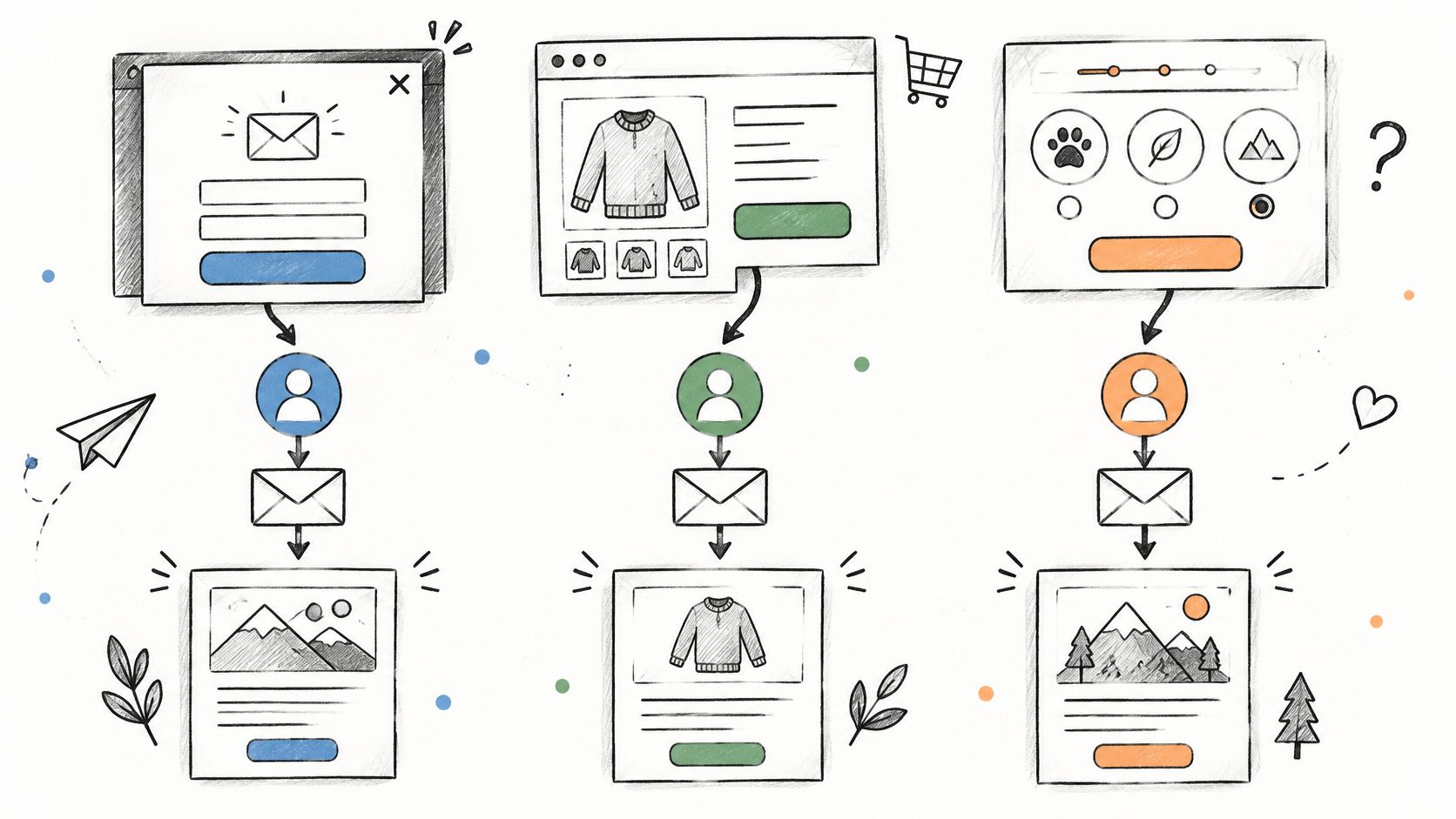
For a food brand, someone joining through a bundle offer should see that bundle, its contents, and the promised terms. A recipe subscriber should receive the recipe first, with relevant products introduced in context.
Start with meaningful differences rather than building a separate flow for every form:
Permission quality belongs in this segmentation, too. The DMARCReport discussion of authentication and inbox placement connects deliverability with authentication and list quality, considerations that should influence welcome-flow operations rather than sit in a separate technical project.
Verify SPF, DKIM, and DMARC configuration, suppress hard bounces, and review questionable acquisition sources before expanding their cadence. Consider stronger confirmation requirements for higher-risk sources rather than assuming every captured address deserves the same sequence.
The trade-off is maintenance. More branches mean more copy, testing, and opportunities for mistakes. Keep a branch only when it changes the subscriber's experience in a useful, measurable way.
Deliver a promised offer immediately, but don't assume every subscriber needs a discount. If your popup advertises an incentive, the first email must make it easy to find and redeem. If signup was driven by education or early access, you can lead with that value instead.
Choose the offer using order economics, not competitor habits. Free shipping, a gift, and a percentage discount create different costs, especially across lightweight products, expensive shipping destinations, and mixed-margin catalogs.
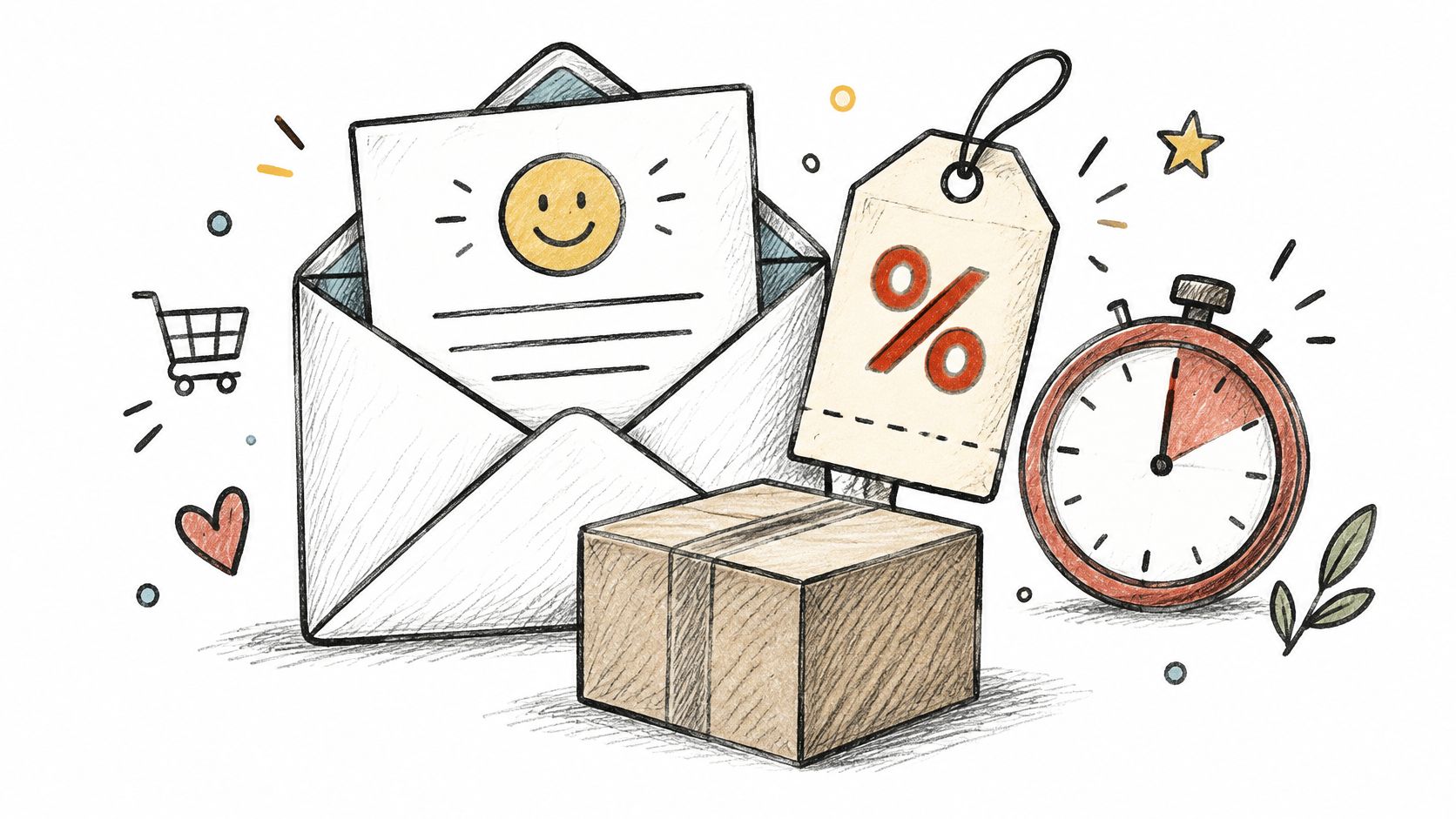
Estimate contribution after product cost, fulfillment, payment fees, shipping subsidy, and the incentive itself. Include gift costs and additional fulfillment work where relevant. An offer that raises attributed revenue can still produce worse economics.
The Darkroom welcome-email examples guide provides conversion-focused approaches, but offer selection also requires a separate question: does the incentive create incremental profit, or merely discount an order the subscriber already intended to place?
Say a wellness brand recommends a starter bundle. Compare the bundle's contribution after the welcome incentive with the likely alternative purchase, rather than celebrating the larger cart alone.
Margin rule: Don't escalate the discount simply because a subscriber hasn't purchased. Address uncertainty before paying more for the same decision.
Make deadlines genuine. Configure expiration in the commerce platform, state eligibility clearly, and ensure any email countdown timer reflects the actual redemption deadline rather than resetting on every visit.
Exclude purchasers from remaining reminders, prevent unintended stacking, and send shoppers to eligible products. Test a non-discount path for high-intent subscribers, too. Product confidence, convenient selection, or useful guidance may be the missing ingredient.
Your founder's history matters only when it helps the subscriber understand the product. Translate the brand story into a buying reason, such as a distinctive fit, thoughtful formulation, sourcing choice, or easier preparation method.
For a skincare brand, that means connecting ingredient decisions to the product's intended use and limitations. Don't turn education into unsupported treatment claims, and don't expect an emotional origin story to answer practical questions about texture, routine compatibility, or application.

Ask support staff what shoppers need to know before buying. Then assign those questions to the welcome sequence instead of filling space with broad statements about quality.
Say a food brand sells an unfamiliar powdered drink. Preparation instructions, flavor descriptions, and serving suggestions may be more useful than another lifestyle photograph. Link the educational CTA to the relevant product or guide, not a homepage where the subscriber must start searching again.
Education-first doesn't mean hiding a promised discount until later. Deliver the signup promise immediately, then use subsequent messages to explain why the product deserves consideration.
The trade-off is length. High-consideration products may need more explanation, but each email still needs a clear purpose. Cut repeated mission statements before cutting information that helps someone choose confidently, and avoid treating a lack of purchase as proof that the subscriber needs a harder sell.
Send the first welcome email immediately, then let behavior influence what happens next. Don't delay a promised incentive to suit a batch schedule. Subsequent messages can wait, change, or disappear depending on what the subscriber does.
The Feat welcome-email benchmark guide describes an immediate opening message followed by a sequence spread across approximately one to two weeks. Treat that as a planning range, not a requirement to keep messaging every subscriber for the full period.
In Klaviyo, configure the signup trigger, flow filters, delays, and conditional splits separately. A person who qualified when they entered may no longer qualify when the next message is due.
Use a practical decision order:
Say a subscriber clicks a sizing guide and later purchases. The next welcome message shouldn't ask whether they need help choosing a size. It should be skipped, with ownership guidance handled through the appropriate post-purchase flow.
Don't use opens as the only branching signal. Privacy features can make opens unreliable, and a subscriber may read an email without loading its tracking image. Combine available signals, and give uncertain cases a conservative path rather than an endless wait condition.
A smart delay needs an eventual destination. Don't leave subscribers waiting indefinitely for an action they may never take.
Preview every branch with test profiles, including purchasers, inactive subscribers, and people with missing properties. Audit queued sends after editing a live flow, because changing the diagram isn't enough to confirm what each subscriber will receive.
Start with information the subscriber deliberately gave you. A selected flavor preference is a stronger basis for a recommendation than an uncertain inference from a casual page visit.
Use a clear preference hierarchy: declared interests first, relevant observed behavior next, and a curated fallback when neither is available. This keeps personalization useful without pretending you know more about the shopper than you do.
Say a fashion subscriber browses relaxed-fit trousers. Show an appropriate in-stock style, explain its fit, and provide a direct route to the relevant collection. Don't fill the same email with unrelated accessories just because your recommendation engine can populate them.
For a food brand, a declared flavor preference can guide a starter selection. Preserve room for discovery, though, because a viewed product isn't necessarily a permanent preference.
Before enabling dynamic content, review these operational dependencies:
The same implementation discipline applies when avoiding common retail personalization pitfalls. More data fields don't automatically create a better experience, especially when outdated catalog information produces an incorrect recommendation.
Use the video alongside a review of your own product-selection and fallback logic.
Predictive tools are worth testing when you have usable customer history, but don't make them a launch dependency. Compare predictive recommendations with a straightforward curated alternative. If the more complex version doesn't improve the business outcome, keep the simpler system.
A subject line can attract attention without attracting buyers. Choose test winners using the outcome the email exists to produce, not whichever metric looks strongest in the reporting dashboard.
The Stripo email-automation benchmark synthesis recommends isolating test variables and evaluating holdout-adjusted conversion and revenue per subscriber rather than opens alone. That distinction matters when shoppers might have purchased without receiving the sequence.
A useful hypothesis explains what you expect to change and why. For example, a product-led subject line might attract better-qualified visitors than discount-led wording, even if fewer recipients open it.
Keep the body, offer, audience, and timing consistent when testing welcome email subject lines. Otherwise, you won't know which change caused the result.
Say a wellness brand compares a shorter sequence with a longer education-led version. Evaluate the complete experience, including purchases, incentive costs, and unsubscribes, rather than comparing only the final emails.
Use a randomized holdout where traffic and business constraints allow. Keep its purchase observation window comparable with the treatment group, and distinguish welcome-flow impact from other campaigns.
Small audiences require patience. If the result is inconclusive, say so. Don't turn a temporary lead into a permanent rule, and don't keep testing minor button changes while broken incentives or missing purchaser exclusions remain unresolved.
A subscriber doesn't experience your welcome, cart, browse, and SMS automations as separate systems. They experience messages from your brand. Coordinate those messages before adding more channels.
Email consent isn't SMS consent. Record channel permissions separately, retain the relevant signup details, and have consent language, sending restrictions, and opt-out handling reviewed for the markets you serve.
Document what happens when someone qualifies for overlapping flows. A practical starting point is to prioritize purchase-related communications and high-intent assistance over general introductory promotion, while keeping transactional and marketing rules distinct.
Say a subscriber receives a welcome offer, adds a bundle to their cart, and abandons checkout. Let the checkout message address that shopping decision instead of sending a simultaneous brand-history email and a duplicate text reminder.
After purchase, change both the objective and the language. A food customer may need preparation and storage guidance before replenishment messaging. A fashion buyer may need care instructions before complementary-product recommendations.
Handoff principle: The first order ends the prospect conversation. It doesn't end the relationship.
Build purchaser exclusions into every relevant promotional send, not just the flow entrance. Then test the transition using a profile that purchases while waiting between messages.
Finally, give nonbuyers a destination. Move eligible subscribers into preference-based ongoing communications, reduce frequency when engagement is weak, or suppress where appropriate. Finishing the welcome sequence shouldn't automatically qualify someone for every future broadcast.
| Practice | Primary Focus | Lifecycle Stage | Difficulty | Primary Metric |
|---|---|---|---|---|
| Define Goals and Map the Welcome Series to the Customer Lifecycle | Align email content with lifecycle goals | Planning through early repeat purchase | Medium | First-purchase rate, repeat rate, or revenue per recipient |
| Segment Welcome Flows by Signup Source and Intent | Tailor messages to signup source and subscriber intent | Signup and early onboarding | Medium | Early engagement, such as opens and clicks |
| Lead With a Clear, Time-Limited First-Purchase Incentive | Encourage a first purchase with a deadline-based offer | Early onboarding and first purchase | Low | First-purchase conversion |
| Build a Brand Story and Education Sequence Before the Hard Sell | Build trust through brand and product education | Early onboarding before first purchase | Medium | First-purchase conversion |
| Time Emails Around Behavior and Use Smart Delays | Adapt send timing and flow paths to subscriber behavior | Welcome flow through purchase or re-engagement | High | Conversion and purchaser exit rate |
| Personalize Product Recommendations and Dynamic Content | Match recommendations and content to subscriber data | Early onboarding and product consideration | High | Conversion from recommended products |
| Test Subject Lines, Offers, Send Timing, and CTAs Systematically | Improve flow performance through controlled testing | Ongoing welcome-series optimization | Medium | Revenue per recipient or conversion rate |
| Integrate SMS, Set Clear Overlap Rules, and Hand Off to Post-Purchase Flows | Coordinate channels, flow priorities, and lifecycle handoffs | Welcome through post-purchase | High | Repeat-purchase performance |
A high-converting welcome series isn't a collection of attractive emails. It's a connected system of lifecycle goals, signup context, sustainable incentives, useful education, behavioral rules, reliable product content, controlled testing, and post-purchase handoffs.
The connections matter as much as the individual messages. A strong offer can still lose money if it reaches existing customers. Helpful product education can arrive too late if the subscriber has already abandoned checkout. A persuasive deadline reminder becomes a service problem when it reaches someone who purchased.
Audit the live subscriber experience, not just the flow diagram. Create test profiles for the signup paths your store uses, then follow them through the same decisions real subscribers encounter. Confirm what happens when a person purchases, ignores the sequence, changes preferences, or qualifies for another automation.
Start with problems that can waste money or damage trust. Broken redemption links, inaccurate product blocks, missing permission checks, and post-purchase discount reminders deserve attention before stylistic refinements.
A sensible improvement order is:
Keep operational ownership clear. Someone needs responsibility for catalog changes, offer updates, deliverability signals, and flow testing. Automation removes repetitive execution, but it doesn't remove the need for judgment.
The repeat-purchase opportunity begins with what happens immediately after checkout. Useful ownership guidance, realistic replenishment timing, and relevant complementary products help you boost customer loyalty with automation without treating every follow-up as another discount opportunity.
If you'd rather have the system built for you, Class A Media offers a custom Welcome Flow with strategy, copy, design, and implementation, delivered in 5 days. We use a one-time payment model rather than ongoing agency retainers, and our Welcome Flow process has been used by 200+ top brands.
Whether you build internally or bring in support, start with the customer's next decision and the business outcome you need. Deliver the signup promise, help shoppers choose confidently, and stop selling like they're prospects once they become customers. That's how a welcome series becomes a durable part of your retention system rather than another campaign running unattended.
Class A Media builds done-for-you welcome flows with strategy, copy, design, and implementation suited to your business. Visit Class A Media to discuss a welcome series that connects signup intent, first-purchase messaging, and the handoff into post-purchase retention.
Let's build retention system that drive predictable, scalable revenue - without ad spend, without retainers, without guesswork.


The Ultimate Ecommerce Email Marketing Agency
Get in touch: hello@classamedia.com