Blog post
Insights
10 Email Marketing Agencies Worth Comparing in 2026
Most email marketing agencies sell a retainer, but ongoing management is not always the right purchase. If the main gap is a missing post-purchase sequence, weak segmentation, or an outdated abandoned-cart flow, a defined project may solve the problem at lower commitment.
Choose by commercial model, not by agency name. A one-time project builds defined infrastructure; a retainer pays for continuing management; itemized work covers specific deliverables; and an audit gives you a diagnosis before implementation. Each model suits a different level of in-house capacity and need for ongoing execution.
Compare platform expertise, email and SMS coverage, attribution, and handover terms. Also ask how an agency will validate contacts across client campaigns, document consent, and suppress customers who should not receive a message.
For a shortlist, group agencies by the engagement you need:
These are selection categories, not a universal ranking. Match the agreement to your retention gap, available internal resources, and need for ongoing campaign execution.

Best for custom lifecycle automation without an ongoing agency retainer. At Class A Media, we build email and SMS flows for ecommerce brands, with Shopify as a focus. Our stated commercial model is a one-time payment, making us a strong first conversation for brands that want retention infrastructure rather than outsourced campaign production.
Our work combines lifecycle strategy, copy, conversion-focused design, behavioral segmentation, and predictive triggers. We build around the customer's purchase journey, including education before a high-ticket purchase and loyalty-driven communications after delivery. We don't run advertising or regular broadcast campaigns, so brands needing a promotional calendar should keep that function in-house or appoint a separate partner.
Choose this approach when your existing traffic and customer relationships deserve better automation, but your team can manage routine merchandising and campaigns. Our Klaviyo agency partnership is relevant to brands seeking platform-specific implementation rather than a generalist creative supplier.
Class A Media's email and SMS flows have generated over $150 million in attributable revenue. That credential demonstrates implementation experience, but attributable revenue isn't automatically incremental profit, and it shouldn't become a promise about your store.
Project pricing requires a personalized proposal. Use the scope, not an assumed bargain, to evaluate the upfront investment.
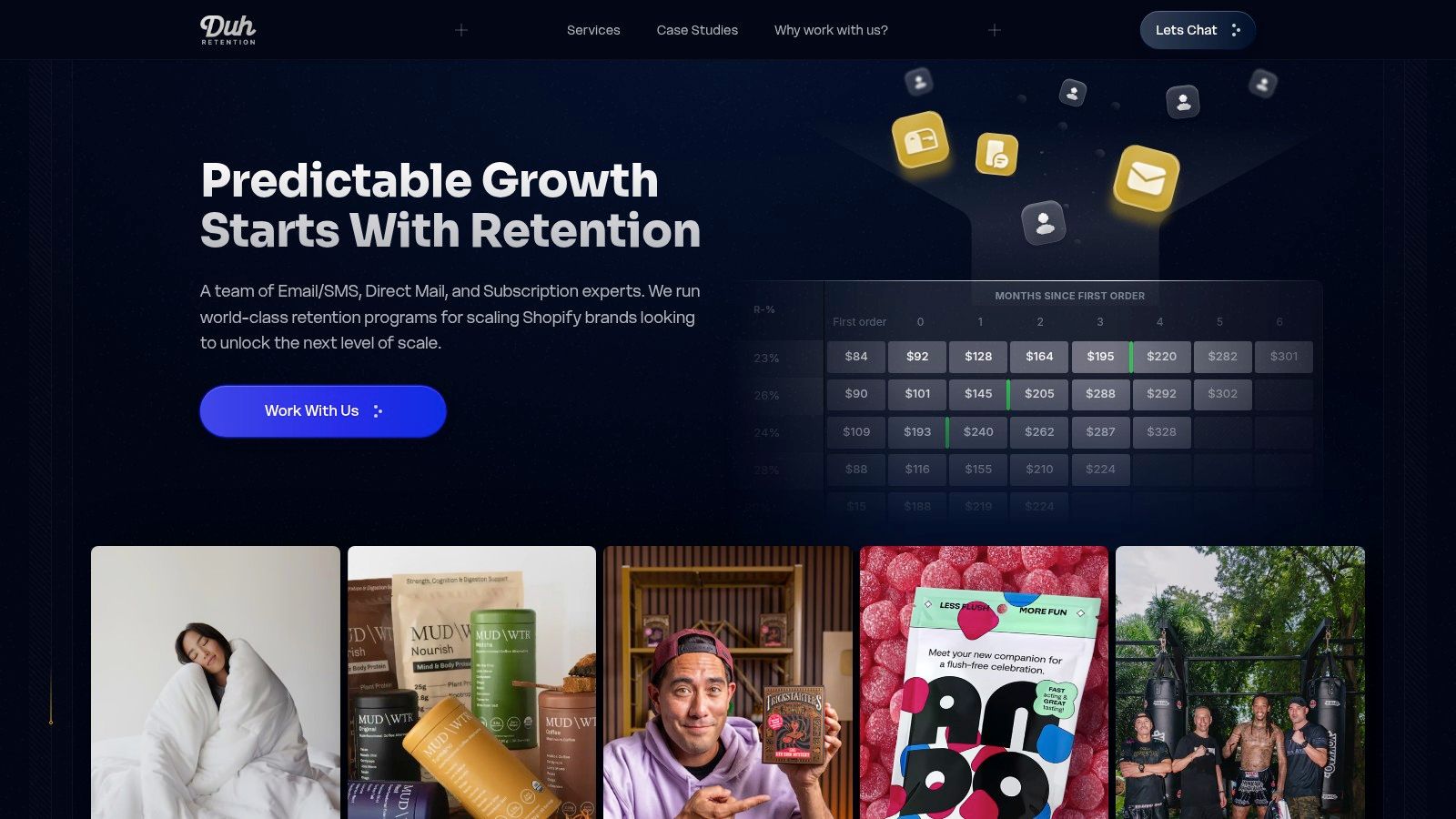
A Shopify brand with a busy promotional calendar needs different support from a store missing core automations. Duh Retention offers both one-time projects and ongoing retainers, so it's worth comparing when you haven't yet decided whether to outsource the build, the operation, or both.
Its Shopify-only focus is useful. Strategy, execution, design, and copywriting sit within the engagement, reducing the need to coordinate separate freelancers across your retention program.
Choose the project route for a defined repair or rebuild. Choose ongoing management only when there's recurring work your internal team can't cover, such as campaign planning, creative production, segmentation, and testing.
Buying rule: A retainer should purchase a recurring workload, not simply access to an agency.
Duh Retention positions its ongoing service toward established Shopify businesses and applies a revenue qualification requirement. Confirm the current threshold, onboarding commitment, and monthly deliverables directly before allocating budget.
Use your ecommerce email marketing priorities to separate essential work from optional production. If your merchandising team already owns campaigns, don't buy another team to perform the same function.
Ask for separate project and retainer proposals against the same business problem. Comparing those scopes will reveal whether the recurring commitment buys meaningful additional execution.
Put Mail-Aid on your shortlist when the email program needs rebuilding, not merely reskinning. Mail-Aid focuses on ecommerce email marketing, including automation and broader program structure, with Shopify and Klaviyo examples available for evaluation.
The distinction matters for your budget. Replacing graphics will not fix a welcome sequence that treats returning customers like new subscribers, or a replenishment message that ignores which product someone purchased. A genuine rebuild starts with customer events, audience rules, and purchase context before anyone touches creative. Flows built on those triggers typically convert far better per recipient than one-off campaigns, so judge a rebuild proposal by how thoroughly it reworks the underlying automation logic.
Mail-Aid's public examples give you something concrete to discuss, but don't accept the headline outcome alone. Ask which automations changed, whether the store's traffic or promotional intensity changed, and how the agency calculated customer lifetime value.
Its references to predictive analytics deserve the same scrutiny. Ask what customer information drives each prediction, which messages change because of it, and how the team handles customers with limited purchase history.
Don't classify Mail-Aid as a fixed-price project provider until you receive that proposal in writing. A defined rebuild scope is worth paying for. An undefined promise to improve email is not.

Postman Agency is worth comparing if you want a choice between one-time flow setup and monthly retention support. Its ecommerce focus makes it relevant to brands that already handle acquisition internally and need a narrower email partner.
The agency describes using Shopify and Google Analytics information to test send timing. That's a useful discussion starter, but insist on the actual method: which customer events matter, how time zones are handled, and whether timing tests isolate other variables.
A recovery flow, for example, needs more than a preferred send hour. It needs purchaser suppression, accurate cart contents, sensible frequency controls, and an exit when the customer converts.
Postman publishes a performance guarantee. Treat that as a contract term to inspect, not evidence that commercial risk disappears.
Ask whether performance means platform-attributed revenue, incremental orders, or another measure. Establish the baseline, attribution window, exclusions, refund mechanism, and your own obligations before signing.
Choose Postman for a tightly specified engagement, not because a guarantee sounds reassuring. If the proposal can't explain how success will be calculated, the guarantee won't resolve the underlying measurement problem.
Also confirm whether your team receives editable assets and documented trigger logic. A project isn't fully handed over if every future change requires the original builder.

Choose breadth only when you'll use it. Chronos Agency offers lifecycle marketing across email, SMS, and additional retention channels, including push notifications, WhatsApp, RCS, and direct mail.
That range makes it a sensible managed-service candidate for DTC brands coordinating several customer touchpoints. It also makes it excessive for a store that needs an abandoned-cart sequence rebuilt.
Its stated Klaviyo Master Elite status and DTC portfolio provide useful vetting material. Still, the relevant question is whether the assigned team understands your category, data setup, and operational constraints, not just whether the agency has recognizable credentials.
A multichannel engagement should define how messages interact. Email and SMS shouldn't independently send the same promotion to the same customer without a shared contact policy.
Ask Chronos to demonstrate how a customer moves between channels, when one channel suppresses another, and who owns the combined performance report. Confirm that channel-specific production, platform charges, and implementation work are separated in the proposal.
More channels justify a broader engagement only when the agency coordinates them around customer behavior.
Don't assume a selected-service starting quote represents the complete engagement. Request the cost of the operating model you need, including creative, technical changes, and ongoing analysis.
The commercial benefit should be less coordination work for your team, not a longer list of services.
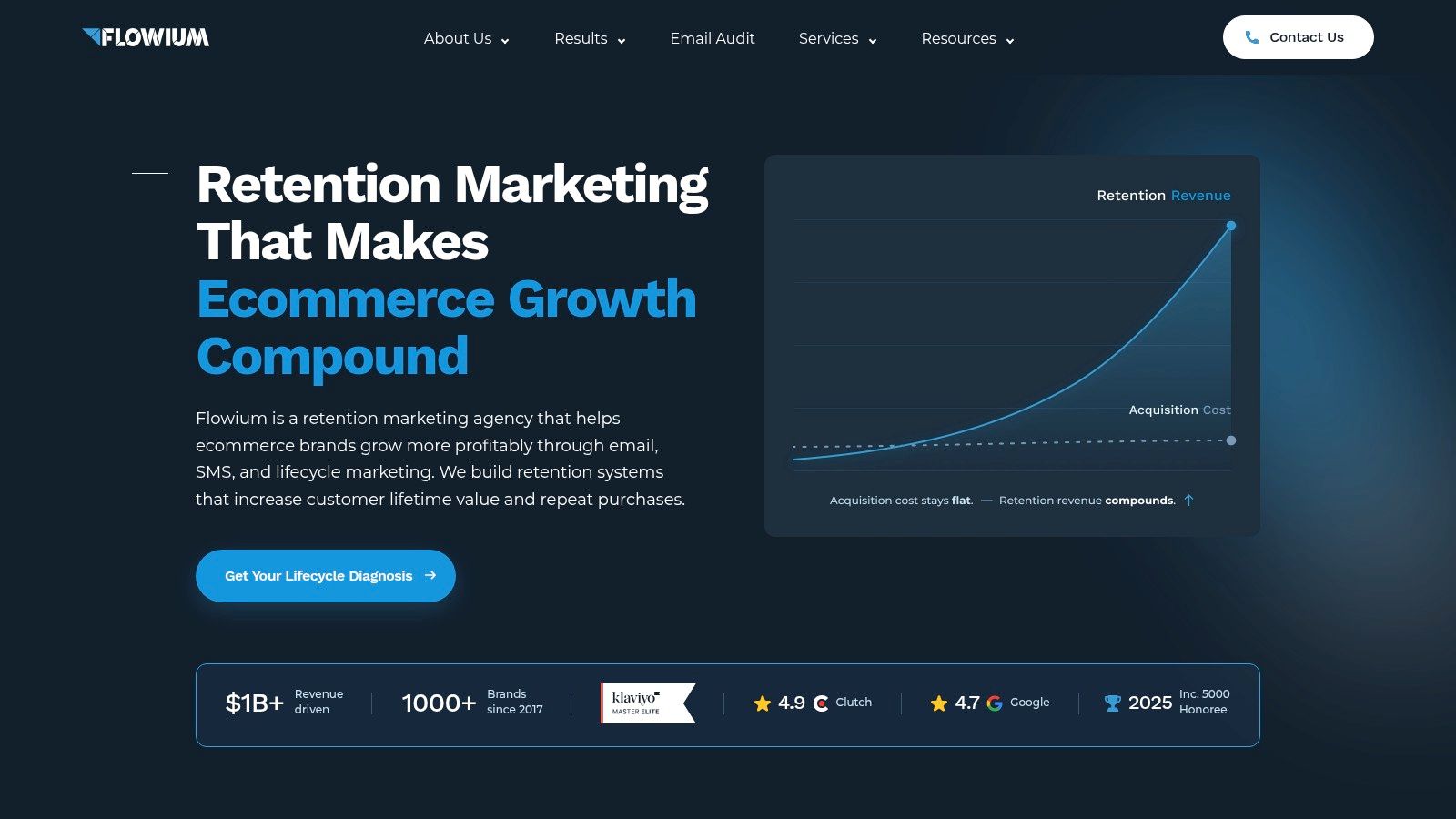
Moving platforms while rebuilding automations is a technical project, not just a creative assignment. Flowium is a relevant candidate because its service coverage includes email and SMS execution, deliverability, reporting, optimization, and platform migration.
Its broader operational scope suits brands that need someone to handle the machinery behind the messages. Campaign planning, copywriting, and design matter, but so do event mappings, historical customer properties, suppression lists, and working integrations.
Shortlist Flowium when execution complexity is your bottleneck. Don't pay for a broad managed engagement if your internal team only needs a discrete migration or deliverability intervention.
A migration proposal should identify what transfers, what gets rebuilt, and what must be tested before sending resumes. Consent records and suppression status deserve explicit acceptance criteria, rather than a vague promise that the account will be moved.
For brands comparing an ecommerce marketing agency with a retention specialist, Flowium's appeal is operational depth within email and SMS. That doesn't remove the need to define boundaries.
Scope-based pricing can produce a relevant proposal, but it makes comparisons harder. Give competing agencies the same brief and require each to identify exclusions.
Before signing, request a sample migration test plan and reporting format. Those documents will tell you more about execution discipline than a broad promise of optimization.
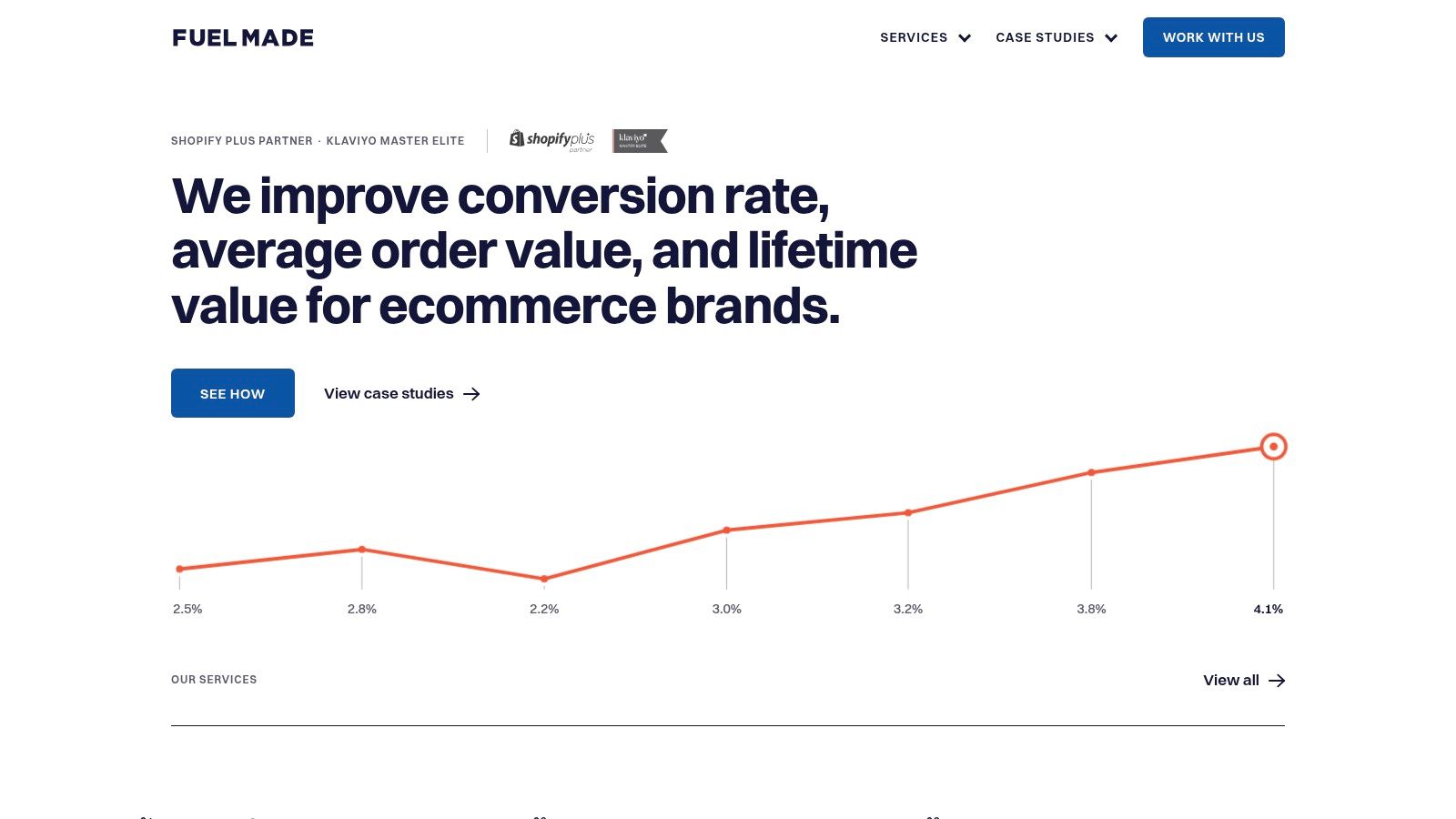
An email agency can't fix every reason customers fail to buy again. Sometimes the obstacle is a confusing product page, a poor mobile experience, or a storefront that makes replenishment difficult.
Fuel Made is distinctive because it combines Klaviyo email and SMS marketing with Shopify design, development, and conversion-rate optimization. Choose it when retention work needs coordinated storefront changes, not merely better inbox creative.
The agency offers one-time setups and ongoing lifecycle marketing, while positioning its longer relationships toward established brands. Its stated Klaviyo Master Elite and Shopify Plus partnerships are relevant credentials to verify alongside examples of comparable work.
Ask for separate responsibilities and success measures for email and storefront changes. If a checkout improvement and a flow rebuild launch together, don't attribute the entire commercial improvement to email.
For a fashion brand, that might mean coordinating fit guidance in post-purchase messages with clearer sizing information on the product page. For a consumables brand, it could mean linking replenishment reminders to a simpler reorder experience.
Confirm whether a one-time engagement includes development or only lifecycle setup. Don't infer that every service on the agency website belongs in your quote.
Fuel Made is a strong comparison for coordinated Shopify growth work. It's less compelling when your sole requirement is a contained automation build with no storefront dependencies.
SmartMail is the clearest itemized-work candidate in this comparison. SmartMail prices work by campaign or automation, making it relevant to teams that want defined production rather than a conventional monthly agency arrangement.
Its campaign offering covers strategy, calendar planning, design, copy, testing, segmentation, and reporting. Automation work includes planning, creative, copy, and setup in the email service provider.
That model suits an internal marketer who knows what needs shipping but lacks production capacity. It doesn't automatically suit a founder who needs an external retention leader to decide what should happen next.
Cost control: Compare the complete planned workload, not the advertised price of an individual deliverable.
A campaign isn't a universal unit of work. A simple promotional send and a segmented product launch can require different creative, testing, and implementation effort.
Clarify whether variants, audience splits, revisions, mobile testing, and reporting are included. For automations, establish whether the deliverable is a basic sequence or a behavior-based system with conditional branches and product-specific messaging.
Ask SmartMail to price your actual campaign calendar and flow map. Then compare that total with a retainer proposal covering equivalent work.
Choose itemized execution when your team can supply direction and maintain continuity. If you need ongoing strategic ownership, buying disconnected assets won't solve that management gap.
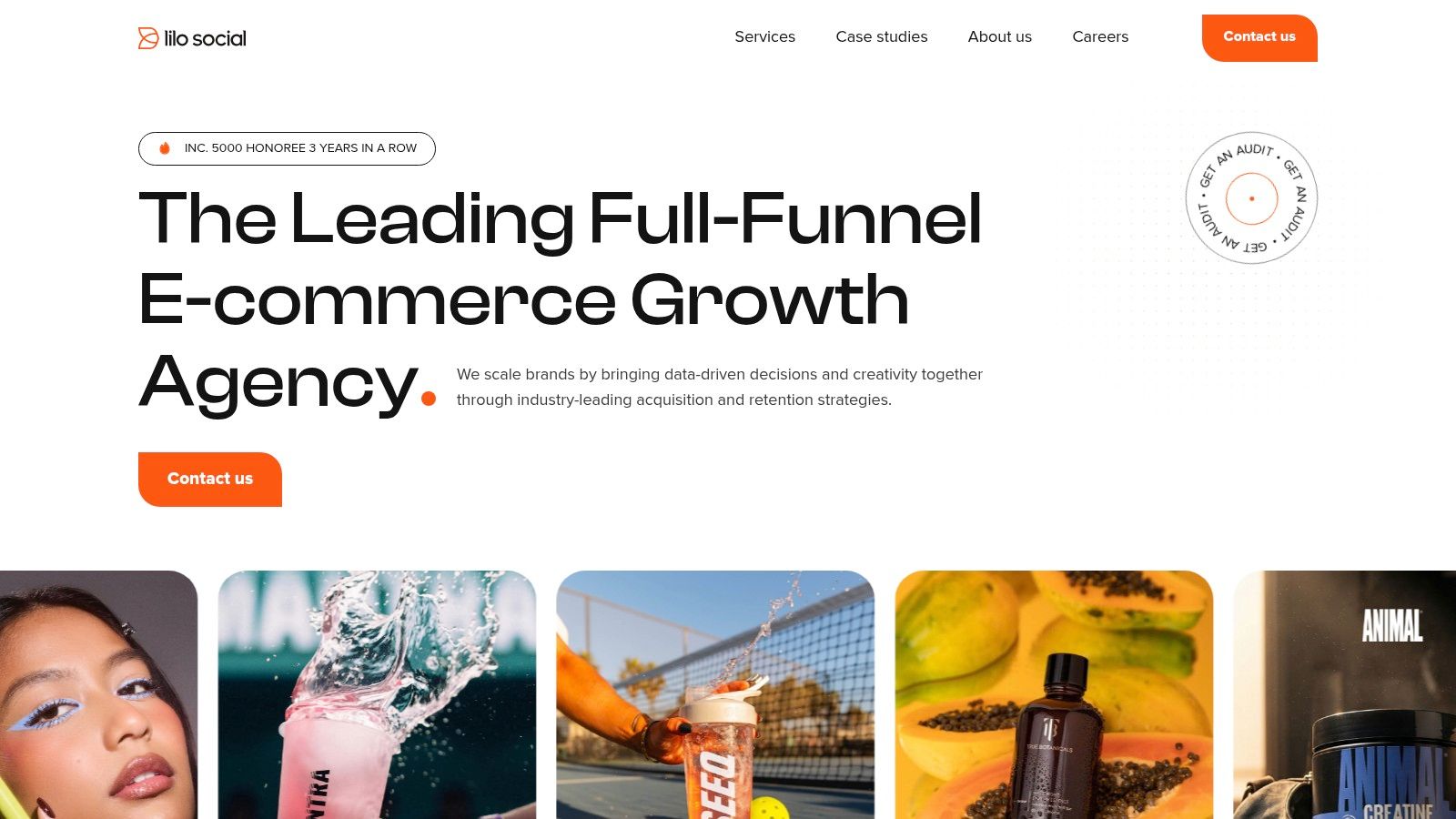
Lilo Social belongs on the shortlist when acquisition and retention need to be planned together. Its ecommerce growth offering combines retention services with paid media, while email and SMS work includes personalization, automation, and testing.
That combination is useful when the promise made in an advertisement needs to continue through the welcome sequence and post-purchase experience. It also creates a reporting risk: a broader growth partner can present strong aggregate results without clearly isolating retention's contribution.
Purchase context deserves particular attention. Coverage of ecommerce cohorts found that customers acquired during Black Friday/Cyber Monday 2024 had a six-month repeat-purchase rate of 13.95%, versus 19.2% for customers acquired at other times, according to Retention Edge's post-event analysis.
A sale-driven first-time buyer shouldn't automatically receive the same follow-up as a full-price customer purchasing a replenishable product. Ask Lilo Social how acquisition source, discount use, gift intent, and product category change lifecycle messaging.
Its published client examples, including SEEQ, provide specific work to discuss. Request the actual division of responsibilities across paid media, email, SMS, and push.
Pricing needs a scoped proposal. Evaluate the agency as a broader growth partner, not as a direct substitute for a narrowly defined flow-build project.
The strongest proposal will explain where coordination improves execution and where each channel remains independently accountable.
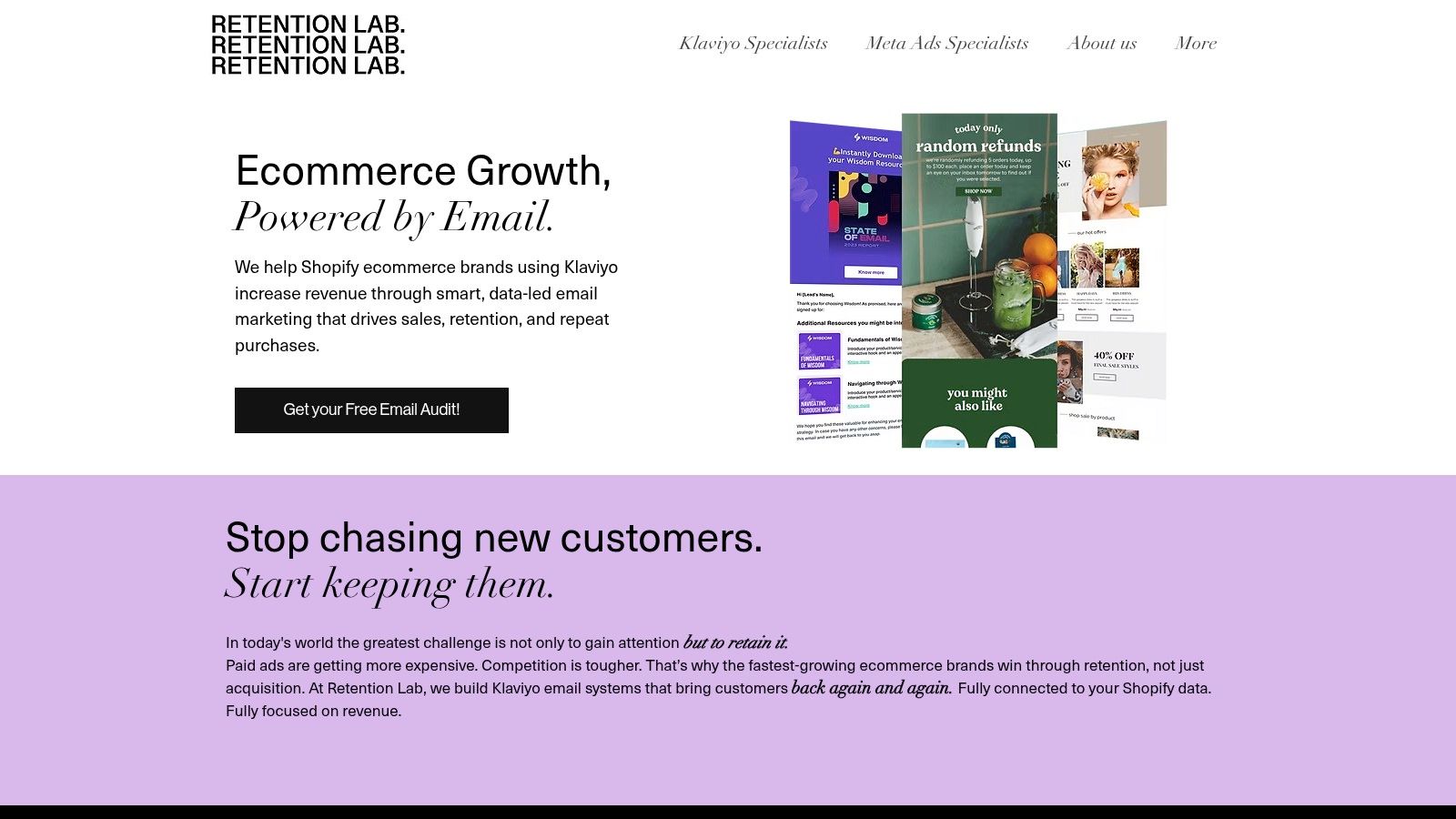
Don't commission a full rebuild if you can't explain what's broken. Retention Lab Agency offers an audit-first entry point for Shopify brands using Klaviyo, with lifecycle work covering welcome, post-purchase, and win-back communications.
Choose an audit when uncertainty is the main problem. That includes stores with overlapping automations, inconsistent tracking, unclear segmentation, or plenty of platform-reported revenue but little confidence in what to improve.
Its narrow Shopify and Klaviyo focus suits a contained retention assessment. The important commercial distinction is that a strategy engagement isn't necessarily an implementation engagement.
A valuable audit should identify specific flow defects, audience conflicts, missing customer events, and measurement limitations. It should distinguish urgent technical repairs from opportunities that can wait.
Ask for recommendations ranked by business relevance and implementation effort. A food brand might need product-aware replenishment logic before another generic win-back sequence; a wellness brand might need usage education before cross-sell messaging.
Also establish whether the audit includes a handover discussion and enough implementation detail for another team to execute. Otherwise, you're buying a sales presentation for the next engagement rather than an independent decision tool.
Retention Lab is the logical comparison when you need diagnosis before commitment. Move directly to a build only when you already have a credible, agreed list of gaps.
The pricing model tells you more than the price. Most of these agencies quote on request, so the deciding filter is how they charge: a one-time build, a monthly retainer, itemized work, or a strategy-first engagement. Match that structure to your stage before you compare names.
| Agency | Pricing Model | Published Starting Price | Specialization | Best For |
|---|---|---|---|---|
| Class A Media | One-time project; no ongoing retainer | Not published | Custom email and SMS lifecycle flows | Ecommerce brands focused on retention and repeat revenue |
| Duh Retention | One-time projects and monthly retainers | Quote on request | Shopify email and SMS retention | Established Shopify brands seeking specialist execution |
| Mail-Aid | Not specified | Not published | Ecommerce email, automations, and Klaviyo | Brands building or rebuilding their email program |
| Postman Agency | Monthly retainers and one-time flow setup | Quote on request | Ecommerce email and retention | Brands seeking email support with flexible engagement options |
| Chronos Agency | Service-based; selected services listed on Shopify | Quote on request | Multichannel lifecycle marketing, including email and SMS | DTC brands seeking broad retention-channel coverage |
| Flowium | Scope-based pricing | Not published | Email and SMS, automation, deliverability, and migration | Brands needing managed email operations or platform support |
| Fuel Made | One-time setups and monthly retainers | Quote on request | Klaviyo email and SMS plus Shopify development and CRO | Established Shopify brands seeking integrated lifecycle and storefront work |
| SmartMail | Per campaign or automation | Quote on request | Ecommerce email campaigns and automation | Teams seeking defined, itemized email work |
| Lilo Social | Not specified | Not published | Email and SMS retention plus paid media | Brands seeking a partner across acquisition and retention |
| Retention Lab Agency | Strategy offer and broader services | Quote on request | Shopify and Klaviyo lifecycle email | Brands seeking an accessible audit or strategy starting point |
Read the table by commercial model first. Class A Media and Fuel Made suit brands that want infrastructure built without committing to a retainer. Duh Retention, Postman Agency, and Fuel Made also offer ongoing management for brands that need continued production. SmartMail's per-campaign structure fits teams with in-house strategy that need specific assets shipped. Retention Lab's strategy offer works when you need a diagnosis before committing to a build. Confirm current pricing and scope with each agency directly, since most do not publish fixed rates.
Match the commercial model to the work before comparing agency reputation. Choose audit-first if you don't know why the program underperforms. Choose a one-time project when the missing infrastructure is clear, and choose a retainer when you need continuing campaign management, testing, and production.
Itemized execution fits a different situation: your team owns strategy but needs help shipping specific assets. Don't confuse buying production with hiring someone to own retention performance.
Revenue stage matters, but there's no universal threshold that makes an agency worthwhile. Confirm each provider's qualification requirements, then evaluate affordability against contribution margin, available customer volume, and the internal work the agency will replace.
Before signing, make the proposal answer these questions:
Don't accept open-rate growth as sufficient proof. Validity's 2025 benchmark reported 84.8% inbox placement, according to Verified.email's benchmark coverage, which underlines why delivery and inbox placement deserve separate scrutiny.
Likewise, platform-attributed revenue isn't proof that every credited purchase was caused by email. Require cohort-based repeat-purchase reporting and holdout testing where feasible, then evaluate profit after discounts and implementation costs.
A credible agency explains what it can measure, what it can't isolate, and how you'll make decisions despite those limits.
Ask for a sample report before requesting another presentation. Look for placed orders, revenue per recipient, repeat purchasing, time to the next order, and commercial context, not just visually impressive engagement charts.
For Shopify brands seeking custom lifecycle email and SMS infrastructure without a recurring agency retainer, Class A Media is a strong first conversation. Our official Klaviyo Partner credentials and category-spanning case studies provide material for evaluation, while our project model keeps the buying decision focused on a defined implementation.
The final test is straightforward: Can the agency explain exactly what you're buying, who will operate it, and how you'll judge the result? If those answers remain vague, don't sign.
Class A Media builds custom email and SMS lifecycle flows that help ecommerce brands turn existing traffic and customer relationships into repeat-purchase opportunities, without an ongoing agency retainer. Visit Class A Media to discuss your current automation gaps and request a detailed project scope.
Let's build retention system that drive predictable, scalable revenue - without ad spend, without retainers, without guesswork.


The Ultimate Ecommerce Email Marketing Agency
Get in touch: hello@classamedia.com